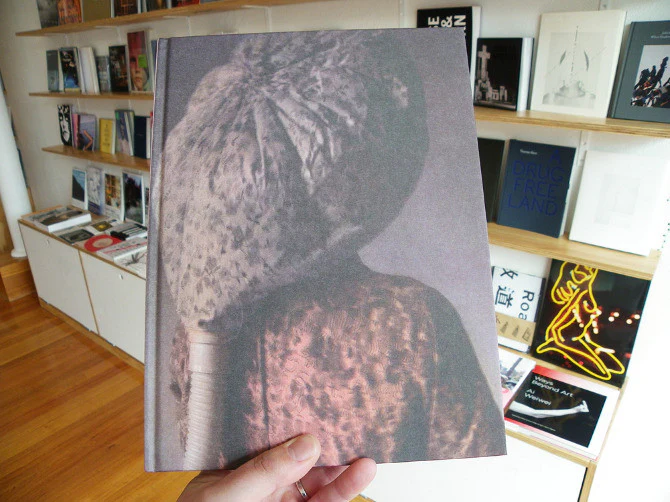
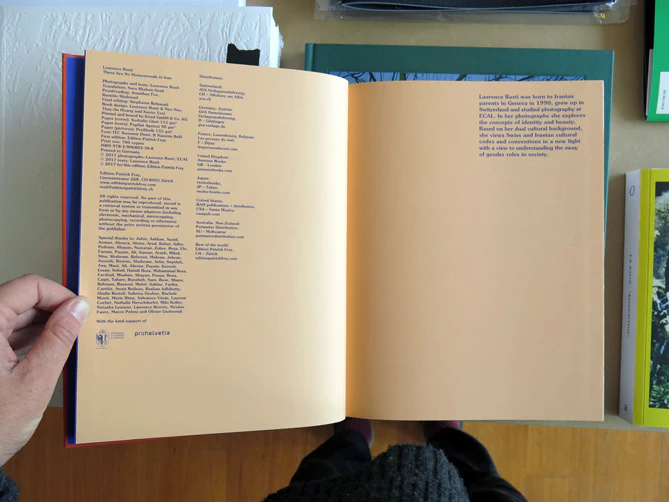
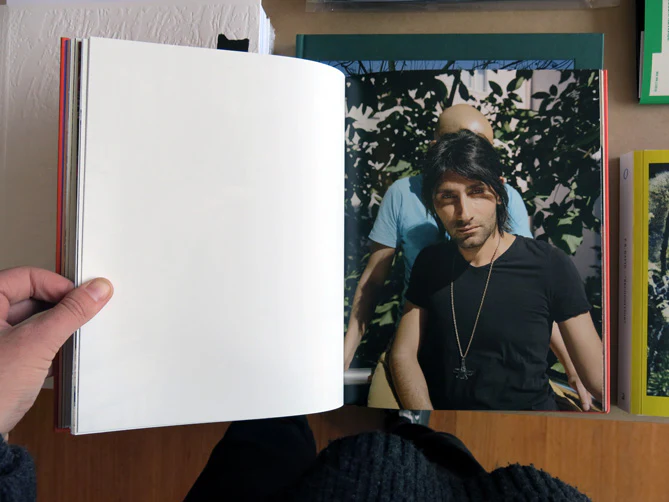
Speaking at Columbia University on September 24, 2007, Iranian president at the time Mahmoud Ahmadinejad proclaimed: “In Iran, we do not have homosexuals like in your country.” Homosexuality is still punishable by death in Iran. Their only options are either to choose transsexuality, which is tolerated by law but considered pathological, or to flee. In Denizli, a town in Turkey, hundreds of gay Iranians are stuck in a transit zone, their lives on hold, hoping to be welcomed into a host country where they can start afresh and come out of the closet. Set in this state of limbo, where anonymity is the best protection, artist Laurence Rasti's photographs explore the sensitive concepts of identity and gender and seek to restore to each of these men the face their country stole from them. The photographs paradoxically juxtapose light, simple, sometimes even festive elements with the gravity of the subject-matter and the precariousness of the subjects’ plight. Alternating between covered and uncovered faces, the series points up the difficulties these men face in reappropriating the identity space they’ve been deprived of. Thanks to Edition Patrick Frey (Zurich).





Laurence Rasti - There Are No Homosexuals in Iran
Original: $137.09
-70%$137.09
$41.13Product Information
Product Information
Shipping & Returns
Shipping & Returns
Description
Speaking at Columbia University on September 24, 2007, Iranian president at the time Mahmoud Ahmadinejad proclaimed: “In Iran, we do not have homosexuals like in your country.” Homosexuality is still punishable by death in Iran. Their only options are either to choose transsexuality, which is tolerated by law but considered pathological, or to flee. In Denizli, a town in Turkey, hundreds of gay Iranians are stuck in a transit zone, their lives on hold, hoping to be welcomed into a host country where they can start afresh and come out of the closet. Set in this state of limbo, where anonymity is the best protection, artist Laurence Rasti's photographs explore the sensitive concepts of identity and gender and seek to restore to each of these men the face their country stole from them. The photographs paradoxically juxtapose light, simple, sometimes even festive elements with the gravity of the subject-matter and the precariousness of the subjects’ plight. Alternating between covered and uncovered faces, the series points up the difficulties these men face in reappropriating the identity space they’ve been deprived of. Thanks to Edition Patrick Frey (Zurich).